
In today’s industrial landscape, where productivity, quality, and safety are top priorities, automation has become a key driver of performance. When it comes to industrial presses, automation allows for greater efficiency, improved consistency, and fewer human errors. But how exactly does automation work on an industrial press? What technologies make it possible? In this article, we’ll break it down in simple, clear terms.
Automation: A Powerful Industrial Advantage
Automating an industrial press isn’t just about adding a few sensors or a robotic arm. It means rethinking the entire production process to make it smarter, faster, and more reliable. With automation, a press can run continuous production cycles at high speed, producing consistent, high-quality parts. Human intervention is significantly reduced, which minimizes the risk of workplace accidents and allows operators to focus on higher-value tasks.
Behind the Scenes: How It Works
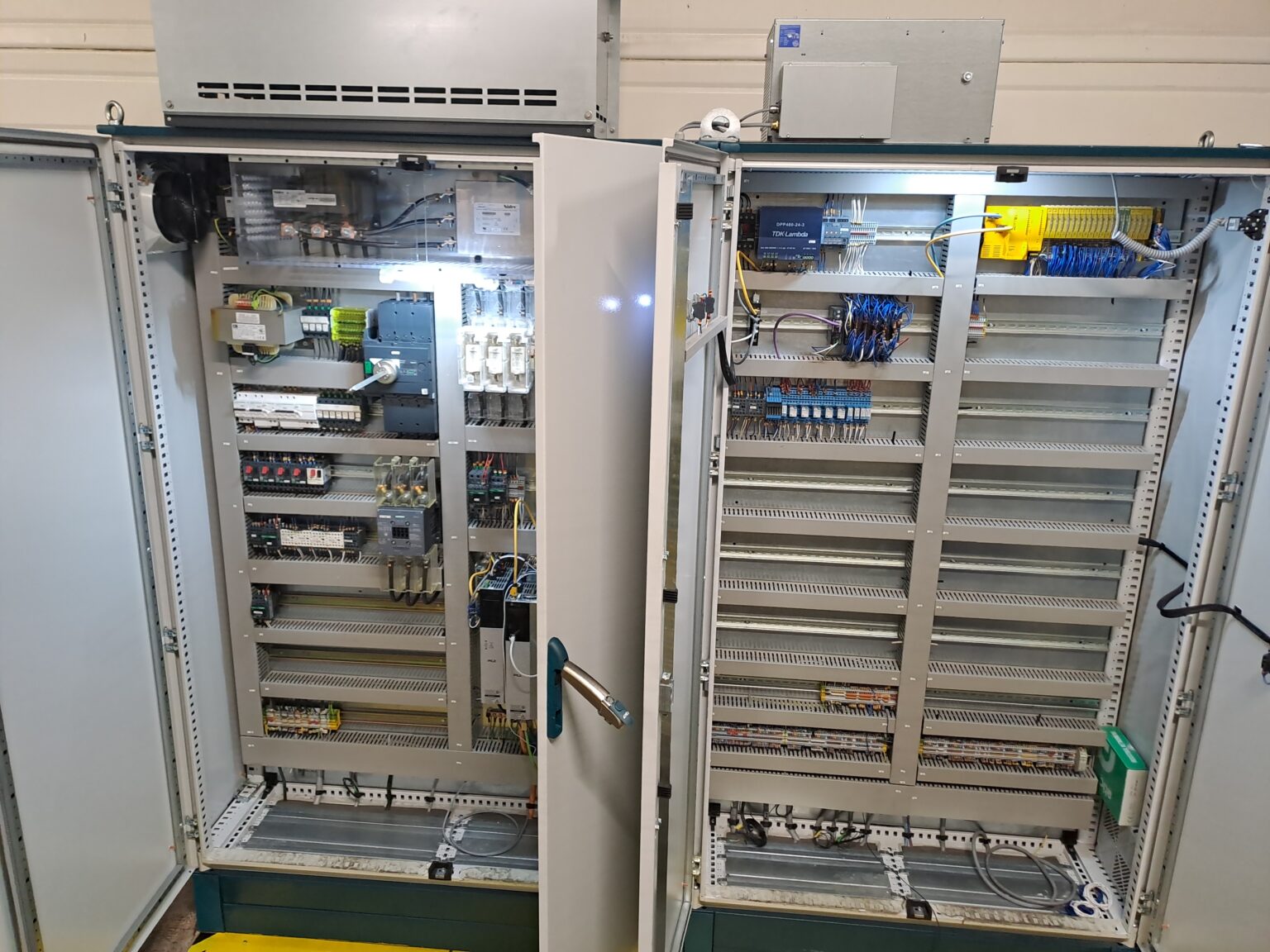
At the core of any automated press system is a Programmable Logic Controller (PLC) or a Computer Numerical Control (CNC) system. This “brain” coordinates every phase of the production cycle—regulating force, adjusting press speed, managing duration, and ensuring proper release of the finished part.
Supporting this control system are various components. Industrial sensors monitor real-time data like force, temperature, and the precise position of each part. If anything falls outside predefined parameters, the system can either make corrections automatically or pause to prevent errors.
Material handling—once done manually—is now automated too. Feeders, conveyor systems, or robotic arms load and unload materials, enabling uninterrupted workflows, sometimes around the clock.
Operators still play a role, but primarily through an HMI (Human-Machine Interface). This touchscreen dashboard gives them access to production data, system diagnostics, and live performance monitoring—all without interrupting the machine’s operation.
A Smarter Production Cycle
Here’s a real-world example: a metal sheet is automatically unrolled and cut to size. It’s precisely positioned beneath the press using alignment sensors. The press then performs its forming or stamping cycle according to pre-set parameters. Once finished, a robotic arm removes the part and transfers it to the next station. Throughout the process, vision systems or sensors check for defects, ensuring only conforming parts move forward.
Presses That Think and Communicate
Automation has gone far beyond just mechanical movement. Thanks to Industry 4.0 technologies, today’s industrial presses can collect and analyze data, connect to ERP and MES systems, and even predict maintenance needs using machine learning. For example, an automated press can now notify the operator when a component is showing signs of wear—well before it causes an actual breakdown. This predictive approach saves time, reduces downtime, and lowers maintenance costs.
Let’s see with a real-world Application: Automotive Manufacturing
In the automotive industry, automated presses are standard. To produce thousands of car body parts daily, manufacturers rely on servo-hydraulic presses integrated into fully automated production lines. These presses adjust automatically to the specific shape or material of each part, perform in-line quality checks, and transmit performance data to the central control system. The result: high-speed production, superior accuracy, and full traceability.
Automation has completely transformed the role of industrial presses. With a smart combination of technologies—control systems, sensors, robotics, and vision systems—presses have become faster, safer, and more intelligent. For manufacturers, this means higher throughput, improved product quality, and a clear competitive edge.